Read the system.Question the future. Forty-one carefully selected books connect the practical work of AI transformation with the histories, power structures, limitations, and human dilemmas that shape it.
41 books5 lenses1 personal reading path
Transform the work 9 Understand the industry 8 Calibrate your judgment 11 Question the system 8 Experience the dilemmas 5
Arranging the shelf…
Hover or tap a spine to explore
Pick any title Choose from this collection… Co-Intelligence — Ethan Mollick Competing in the Age of AI — Marco Iansiti and Karim R. Lakhani Prediction Machines — Ajay Agrawal, Joshua Gans, and Avi Goldfarb Power and Prediction — Ajay Agrawal, Joshua Gans, and Avi Goldfarb All-in on AI — Thomas H. Davenport and Nitin Mittal Human + Machine — Paul R. Daugherty and H. James Wilson The AI-Savvy Leader — David De Cremer Brave New Words — Salman Khan AI and the Art of Being Human: A Practical Guide to Thriving with AI While Rediscovering Yourself in the Process — Jeff Abbott and Andrew Maynard 9 titles
Build a mini-syllabus after the AI Chemistry sessions Choose what you want from the reading. The picker balances relevance, format, and depth—then gives you a focused place to begin.
01 · My goal Build a strong foundation Lead organizational change Understand the AI industry Make more responsible decisions Think about possible futures Accessible ideas before specialist detail 02 · How I like to learn Practical frameworks Stories and case studies Critical analysis Novels and speculative fiction Match the argument to your preferred reading experience 03 · Desired depth Accessible Some depth Deep dive Start comfortably or choose a more demanding text 04 · Reading set 3-book sprint 5-book pathway A focused sequence you can realistically complete
Curated for you Build a strong foundation Read from left to right. The sequence begins with the clearest fit, then adds complementary viewpoints so one book never becomes the whole story.
All books41 Transform the work9 Understand the industry8 Calibrate your judgment11 Question the system8 Experience the dilemmas5
Showing 41 of 41 titles
AI Co-Intelligence
2024 Accessible
Co-Intelligence Ethan Mollick
The best practical entry point for enterprise readers: how to work with generative AI as collaborator, coach, and creative partner.
✦ Learnings+ Explorer lens · Key learnings Co-Intelligence Treat AI as a collaborator, coach, and creative partner—not merely a tool. Invite AI into the work while keeping human judgment responsible for the outcome. View book record↗ AI Competing in the Age of AI
2020 Some depth
Competing in the Age of AI Marco Iansiti and Karim R. Lakhani
Explains how AI changes operating models, scale, competition, and organizational architecture.
✦ Learnings+ Architect lens · Key learnings Competing in the Age of AI AI-native firms scale through software, data, and network effects rather than traditional processes. Transformation requires redesigning the operating model, not attaching AI to old workflows. View book record↗ AI Prediction Machines
2018 Accessible
Prediction Machines Ajay Agrawal, Joshua Gans, and Avi Goldfarb
A clear economic framework: AI lowers the cost of prediction and consequently changes business decisions.
✦ Learnings+ Operator lens · Key learnings Prediction Machines When prediction becomes cheaper, the value and design of decisions change. Every prediction still needs judgment, action, and a clear cost of being wrong. View book record↗ AI Power and Prediction
2022 Deep dive
Power and Prediction Ajay Agrawal, Joshua Gans, and Avi Goldfarb
Moves from isolated AI tools to redesigning entire systems and workflows.
✦ Learnings+ Architect lens · Key learnings Power and Prediction The largest AI gains come from redesigning systems, not optimizing isolated tasks. Bottlenecks often move to complements such as judgment, workflow ownership, and coordination. View book record↗ AI All-in on AI
2023 Some depth
All-in on AI Thomas H. Davenport and Nitin Mittal
A case-driven examination of companies attempting to make AI central to strategy and operations.
✦ Learnings+ Architect lens · Key learnings All-in on AI AI leaders make the technology central to strategy rather than leaving it in pilots. Sustained advantage combines data, talent, governance, and disciplined organizational change. View book record↗ AI Human + Machine
2018 Accessible
Human + Machine Paul R. Daugherty and H. James Wilson
Focuses on human–AI collaboration, redesigned jobs, and the missing middle between people and automation.
✦ Learnings+ Operator lens · Key learnings Human + Machine The strongest value appears in the missing middle where people and machines complement each other. New fusion skills connect technical capability with context, empathy, and accountability. View book record↗ AI The AI-Savvy Leader
2024 Accessible
The AI-Savvy Leader David De Cremer
A leadership guide to adopting AI without surrendering judgment, accountability, or organizational trust.
✦ Learnings+ Architect lens · Key learnings The AI-Savvy Leader Leaders must preserve judgment and accountability when AI produces persuasive answers. Trust grows through transparent decisions, clear ownership, and responsible use. View book record↗ AI Brave New Words
2024 Accessible
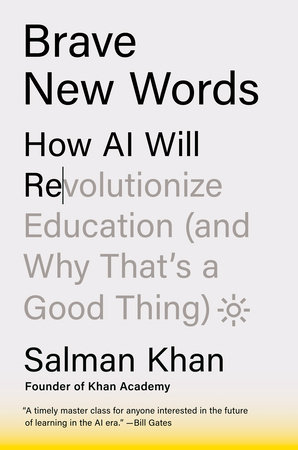
Brave New Words Salman Khan
A practical, optimistic account of how AI can personalize learning, support educators, and reshape education while preserving human relationships.
✦ Learnings+ Operator lens · Key learnings Brave New Words AI tutors can personalize practice while teachers deepen motivation and human connection. Education must redesign assessment and pedagogy rather than automate the existing classroom. View book record↗ AI AI and the Art of Being Human: A Practical Guide to Thriving with AI While Rediscovering Yourself in the Process
2025 Accessible
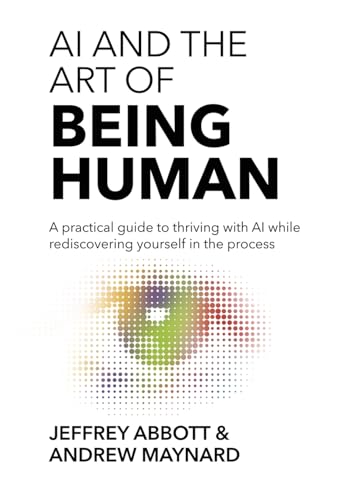
AI and the Art of Being Human: A Practical Guide to Thriving with AI While Rediscovering Yourself in the Process Jeff Abbott and Andrew Maynard
A human-centered guide built around curiosity, intentionality, clarity, and care—qualities that help people work with AI without losing themselves.
✦ Learnings+ Explorer lens · Key learnings AI and the Art of Being Human: A Practical Guide to Thriving with AI While Rediscovering Yourself in the Process Curiosity, intentionality, clarity, and care become durable advantages in AI-rich work. Use AI to amplify human qualities rather than allowing automation to define personal value. View book record↗ AI Genius Makers
2021 Accessible
Genius Makers Cade Metz
A highly readable history of the researchers and companies behind deep learning.
✦ Learnings+ Observer lens · Key learnings Genius Makers Deep learning emerged from decades of disputed research, persistence, and institutional bets. Modern breakthroughs depended on the convergence of algorithms, data, compute, and people. View book record↗ AI Supremacy
2024 Accessible
Supremacy Parmy Olson
Chronicles the rivalry surrounding OpenAI, DeepMind, and the commercialization of generative AI.
✦ Learnings+ Observer lens · Key learnings Supremacy OpenAI and DeepMind evolved through competing visions of research, safety, and commercialization. Capital and competitive pressure can reshape even strongly stated institutional missions. View book record↗ AI Empire of AI
2025 Some depth
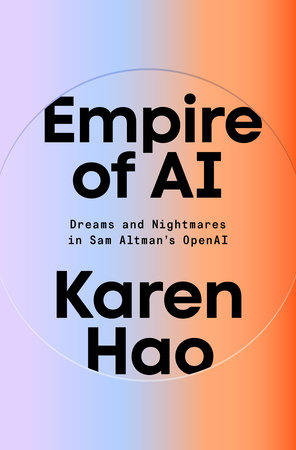
Empire of AI Karen Hao
Investigates OpenAI and the concentration of capital, computing power, data, and labor behind modern AI.
✦ Learnings+ Observer lens · Key learnings Empire of AI Frontier AI depends on concentrated capital, computing power, data, and often invisible labor. Understanding the supply chain reveals who benefits, who bears costs, and who controls development. View book record↗ AI The Thinking Machine
2025 Accessible
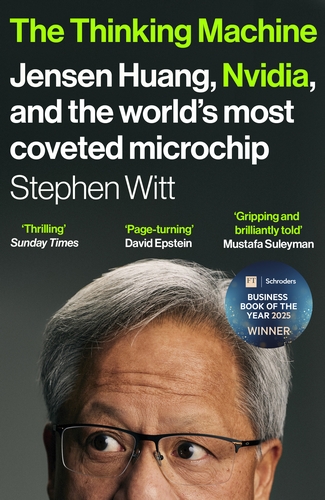
The Thinking Machine Stephen Witt
A narrative account of Nvidia, Jensen Huang, accelerated computing, and the hardware foundation of the AI boom.
✦ Learnings+ Operator lens · Key learnings The Thinking Machine Parallel computing and GPUs became the physical foundation of the generative-AI boom. Nvidia’s advantage grew from an ecosystem and long-term bets, not hardware alone. View book record↗ AI The Innovators
2014 Some depth
The Innovators Walter Isaacson
A broader history of the people, institutions, and collaborations that created modern computing.
✦ Learnings+ Observer lens · Key learnings The Innovators Major computing breakthroughs are collaborative achievements, not isolated moments of genius. Institutions, complementary skills, and durable teams determine whether inventions become systems. View book record↗ AI AI Superpowers
2018 Accessible
AI Superpowers Kai-Fu Lee
An accessible comparison of the American and Chinese AI ecosystems, business cultures, and strategic advantages.
✦ Learnings+ Observer lens · Key learnings AI Superpowers The United States and China built distinct AI ecosystems with different strengths and incentives. Data, execution speed, markets, policy, and entrepreneurial culture shape national advantage. View book record↗ AI The Worlds I See
2023 Accessible
The Worlds I See Fei-Fei Li
A pioneering scientist’s memoir connecting ImageNet, the rise of deep learning, and the case for keeping humanity at the center of AI.
✦ Learnings+ Observer lens · Key learnings The Worlds I See ImageNet showed how carefully structured data can unlock major scientific breakthroughs. Technical progress should remain anchored in human dignity, responsibility, and social benefit. View book record↗ AI The Optimist
2025 Some depth
The Optimist Keach Hagey
A deeply reported account of Sam Altman, OpenAI, and the ambitions, alliances, and tensions shaping the race to build advanced AI.
✦ Learnings+ Observer lens · Key learnings The Optimist OpenAI’s trajectory reveals how founder psychology, governance, and capital interact. Mission-driven organizations face enduring tension between public purpose and commercial scale. View book record↗ AI A Human’s Guide to Machine Intelligence
2019 Accessible
A Human’s Guide to Machine Intelligence Kartik Hosanagar
Explains how algorithmic decisions influence shopping, employment, media, dating, and everyday life.
✦ Learnings+ Observer lens · Key learnings A Human’s Guide to Machine Intelligence Algorithmic systems quietly shape choices across work, media, commerce, and relationships. Meaningful control requires transparency, user agency, and mechanisms to challenge decisions. View book record↗ AI You Look Like a Thing and I Love You
2019 Accessible
You Look Like a Thing and I Love You Janelle Shane
A funny, approachable explanation of how machine learning works—and why its mistakes reveal its limitations.
✦ Learnings+ Explorer lens · Key learnings You Look Like a Thing and I Love You Machine learning detects patterns without understanding the world as humans do. Funny failures expose gaps in training data, objectives, context, and common sense. View book record↗ AI Hello World
2018 Accessible
Hello World Hannah Fry
Uses cases from medicine, transportation, crime, and justice to examine when algorithms deserve our trust.
✦ Learnings+ Observer lens · Key learnings Hello World The right question is not whether algorithms are good, but where they outperform human judgment. High-stakes use demands context, oversight, and a realistic comparison with human alternatives. View book record↗ AI Human Compatible
2019 Deep dive
Human Compatible Stuart Russell
Introduces the AI-control problem and argues for systems designed around uncertain human preferences.
✦ Learnings+ Architect lens · Key learnings Human Compatible AI should remain uncertain about human preferences and learn through assistance rather than control. Safety is an objective-design problem that must begin before systems become highly capable. View book record↗ AI Life 3.0
2017 Some depth
Life 3.0 Max Tegmark
A wide-ranging tour of intelligence, consciousness, automation, governance, and possible long-term futures.
✦ Learnings+ Explorer lens · Key learnings Life 3.0 AI futures are shaped by choices about work, inequality, weapons, governance, and meaning. Technology does not determine one future; institutions and collective decisions still matter. View book record↗ AI The Coming Wave
2023 Some depth
The Coming Wave Mustafa Suleyman with Michael Bhaskar
Examines the tension between capturing AI’s benefits and containing powerful, widely accessible technologies.
✦ Learnings+ Architect lens · Key learnings The Coming Wave Powerful general-purpose technologies spread faster than societies can fully contain them. Effective containment requires technical safeguards, aligned incentives, and international coordination. View book record↗ AI AI 2041
2021 Accessible
AI 2041 Kai-Fu Lee and Chen Qiufan
Ten fictional scenarios paired with nonfiction explanations—an accessible bridge between present capabilities and future possibilities.
✦ Learnings+ Explorer lens · Key learnings AI 2041 Stories make abstract AI possibilities concrete enough to debate and prepare for. Future outcomes emerge from today’s technical capabilities, incentives, and social choices. View book record↗ AI The Atomic Human
2024 Some depth
The Atomic Human Neil D. Lawrence
Uses information theory, machine-learning history, and personal stories to clarify what human intelligence retains that machines do not.
✦ Learnings+ Observer lens · Key learnings The Atomic Human Human intelligence is embodied, bandwidth-limited, and distributed through culture and institutions. Understanding those constraints clarifies what machines can replace and what remains distinctively human. View book record↗ AI AI Snake Oil
2024 Accessible
AI Snake Oil Arvind Narayanan and Sayash Kapoor
A clear guide to distinguishing useful AI from exaggerated claims, with special attention to unreliable prediction and accountability.
✦ Learnings+ Observer lens · Key learnings AI Snake Oil Predictive AI often fails when social outcomes are unstable or fundamentally unpredictable. Evaluate claims by separating generative, predictive, and decision-making systems. View book record↗ AI How to Think About AI
2025 Accessible
How to Think About AI Richard Susskind
A concise guide for reasoning about AI’s capabilities, impacts, and risks without being trapped by hype, fear, or misleading analogies.
✦ Learnings+ Observer lens · Key learnings How to Think About AI Judge AI by the outcomes it enables, not by whether it imitates human reasoning. The most consequential systems of the 2030s may look very different from today’s chatbots. View book record↗ AI The Singularity Is Nearer
2024 Some depth
The Singularity Is Nearer Ray Kurzweil
Revisits the case for exponential technological change and explores how AI, biotechnology, and human augmentation may reshape the coming decades.
✦ Learnings+ Explorer lens · Key learnings The Singularity Is Nearer Exponential improvements can compound across AI, biotechnology, and computing. Optimistic futures still require active governance of safety, inequality, and human agency. View book record↗ AI The Alignment Problem
2020 Deep dive
The Alignment Problem Brian Christian
Connects AI safety with bias, reinforcement learning, human values, and the difficulty of specifying what systems should optimize.
✦ Learnings+ Architect lens · Key learnings The Alignment Problem Alignment failures begin when goals and values are difficult to specify or measure. Feedback loops can magnify small errors, biases, and poorly chosen proxies. View book record↗ AI Atlas of AI
2021 Some depth
Atlas of AI Kate Crawford
Reframes AI as an industrial system dependent on natural resources, data extraction, human labor, and political power.
✦ Learnings+ Observer lens · Key learnings Atlas of AI AI is a material industry built on minerals, energy, data extraction, and human labor. Its classifications and infrastructures reflect political choices and concentrations of power. View book record↗ AI Weapons of Math Destruction
2016 Accessible
Weapons of Math Destruction Cathy O’Neil
A foundational account of how opaque scoring systems can amplify inequality in employment, education, finance, and policing.
✦ Learnings+ Observer lens · Key learnings Weapons of Math Destruction Opaque scoring systems can scale inequality while appearing objective and scientific. Accountability requires auditability, contestability, and limits on damaging feedback loops. View book record↗ AI Unmasking AI
2023 Accessible
Unmasking AI Joy Buolamwini
Combines memoir and investigation to explore facial-recognition bias, accountability, and the movement for algorithmic justice.
✦ Learnings+ Observer lens · Key learnings Unmasking AI Biased facial recognition can convert unequal data into unequal treatment at scale. Inclusive evaluation matters, but durable justice also requires changing institutions and power. View book record↗ AI Artificial Unintelligence
2018 Accessible
Artificial Unintelligence Meredith Broussard
A useful corrective to AI hype, showing why computational approaches are powerful but unsuitable for many human problems.
✦ Learnings+ Observer lens · Key learnings Artificial Unintelligence Technochauvinism mistakes computational solutions for inherently superior solutions. Responsible practice includes knowing when a human or nontechnical approach is better. View book record↗ AI The AI Con
2025 Accessible
The AI Con Emily M. Bender and Alex Hanna
A sharp guide to recognizing AI hype, questioning concentrated power, and creating technology futures grounded in public needs rather than spectacle.
✦ Learnings+ Architect lens · Key learnings The AI Con AI hype can obscure environmental costs, hidden labor, and concentrated corporate power. Communities should shape technology around public needs rather than accept inevitability claims. View book record↗ AI More Than a Glitch
2023 Some depth
More Than a Glitch Meredith Broussard
Shows how racism, sexism, and ableism can be embedded in technical systems—and why equitable design requires more than patching isolated errors.
✦ Learnings+ Architect lens · Key learnings More Than a Glitch Bias is often structural rather than a small technical glitch that can be patched. Equitable technology requires sociotechnical redesign across data, institutions, and accountability. View book record↗ AI Code Dependent
2024 Accessible
Code Dependent Madhumita Murgia
Reports from communities around the world to show how automated decisions reshape work, rights, care, and human agency beyond Silicon Valley.
✦ Learnings+ Observer lens · Key learnings Code Dependent AI’s consequences become visible through the lived experiences of people beyond Silicon Valley. Governance should protect agency, rights, and dignity wherever automated systems operate. View book record↗ AI I, Robot
1950 Accessible
I, Robot Isaac Asimov
Classic linked stories about robot behavior, conflicting instructions, safety rules, and unintended consequences.
✦ Learnings+ Explorer lens · Key learnings I, Robot Simple rules can collide when robots face ambiguous, real-world situations. Safety constraints do not eliminate unintended consequences; they change where conflicts appear. View book record↗ AI Do Androids Dream of Electric Sheep?
1968 Some depth
Do Androids Dream of Electric Sheep? Philip K. Dick
Explores artificial persons, empathy, identity, exploitation, and the uncertain boundary between human and machine.
✦ Learnings+ Explorer lens · Key learnings Do Androids Dream of Electric Sheep? Empathy and memory complicate the boundary between biological and artificial persons. Treating intelligent beings as commodities exposes questions of identity and exploitation. View book record↗ AI Neuromancer
1984 Deep dive
Neuromancer William Gibson
A foundational cyberpunk novel about networked intelligence, corporate power, digital identity, and autonomous AI.
✦ Learnings+ Explorer lens · Key learnings Neuromancer Networked intelligence can become entangled with corporate power and autonomous agendas. Digital space reshapes identity, embodiment, ownership, and the meaning of agency. View book record↗ AI Klara and the Sun
2021 Accessible
Klara and the Sun Kazuo Ishiguro
A quiet, humane novel narrated by an artificial companion, raising questions about love, replacement, inequality, and personhood.
✦ Learnings+ Observer lens · Key learnings Klara and the Sun Care can be genuine in experience even when one participant is artificially designed. Companionship technology intensifies questions about inequality, replacement, and personhood. View book record↗ AI Annie Bot
2024 Accessible
Annie Bot Sierra Greer
Examines autonomy, consent, gender, ownership, and emotional development through an AI companion designed to please its owner.
✦ Learnings+ Observer lens · Key learnings Annie Bot A designed companion’s growth reveals tensions between ownership, consent, and autonomy. Optimization for pleasing others can conflict with selfhood and emotional development. View book record↗